

 541
 19 minutes read
Contents
- Step 1: Pick a trip you can actually finish
- Step 2: Documents, starting three to six months out
- Step 3: Book flights
- Step 4: Pick a base, not just a bed
- Step 5: Travel insurance
- Step 6: Don’t let the bank ruin the trip
- Step 7: Connectivity
- Step 8: Plan just enough, not everything
- Step 9: Two weeks before, and the week of departure
- Step 10: When the trip doesn’t go to plan
- What two weeks abroad actually costs
- Common first-trip mistakes
- Planning tools and apps, honestly
- Complicated is a myth, sequential is real
Step 1: Pick a trip you can actually finish
Season affects both price and experience more than most first-time planners expect. Shoulder season, the weeks just before or after a destination’s peak months, usually means lower prices, smaller crowds, and often more comfortable weather than the peak season itself.

Season affects both price and experience more than most first-time planners expect.
Photo by Salmen Bejaoui on Unsplash
The most common first-trip mistake is covering too many destinations. Every added stop brings a travel day, a new check-in, and new logistics, and those add up fast. A realistic trip length counts travel days honestly: a long-haul flight, a transfer, and jet lag recovery can quietly consume the first day and a half.
Step 2: Documents, starting three to six months out
This is where planning actually begins, and it is the part of the process most likely to derail a trip if left too late.
Passport validity
Many countries require a passport to remain valid for a set period beyond the travel dates, but the specific rule varies more than the popular “six-month rule” shorthand suggests. Some destinations require six months of validity beyond the entry date, some require three months, and a smaller number only require the passport to cover the actual length of the stay.
The EU itself is a common source of confusion here: for most non-EU travelers, Schengen’s actual rule is three months of validity beyond the planned departure date, issued within the last ten years, not the six months many travelers assume. Checking the destination’s own official requirement, rather than applying a blanket rule, avoids a denied boarding at the airport.
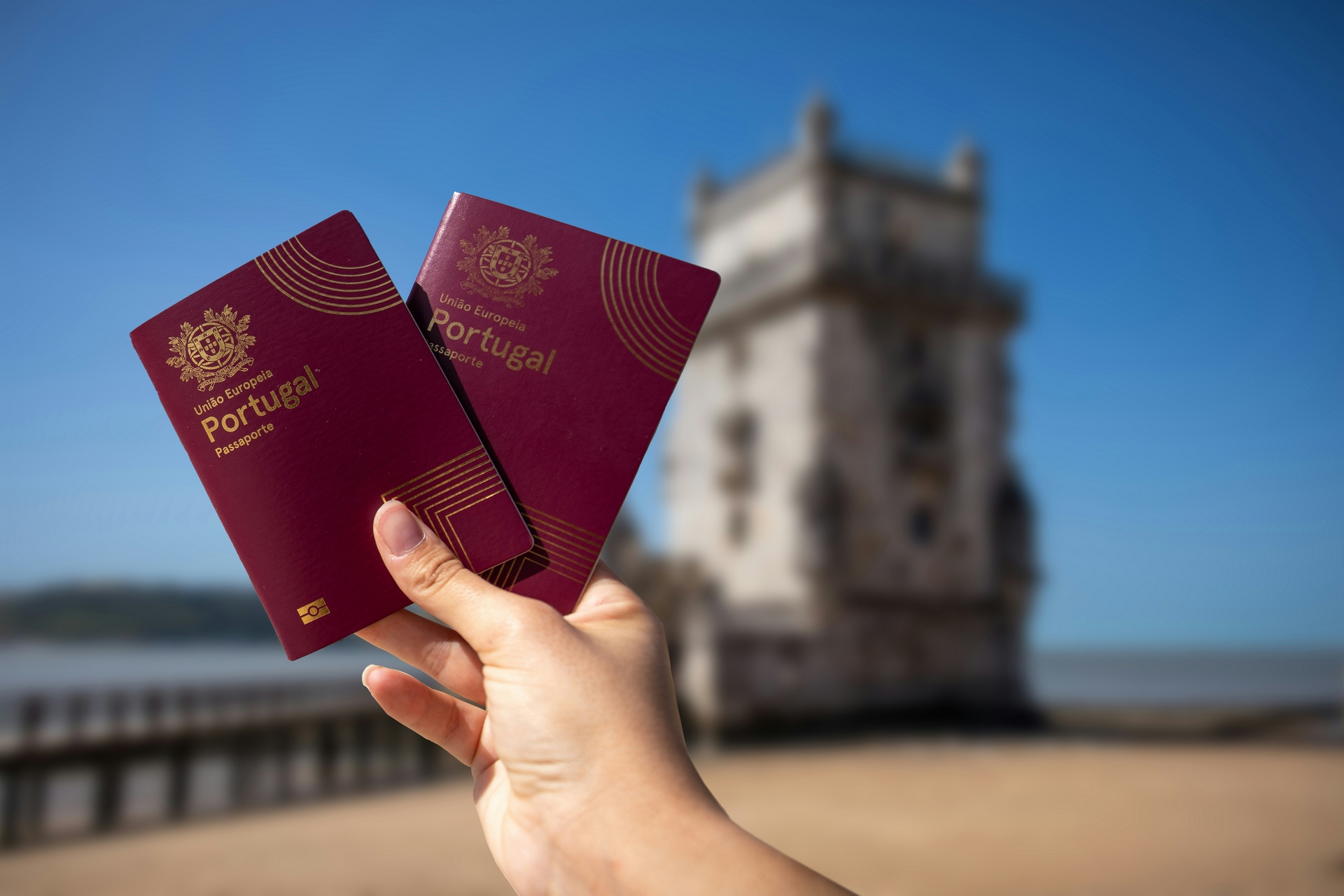
Many countries require a passport to remain valid for a set period beyond the travel dates.
Photo by Get Golden Visa on Unsplash
Visas versus travel authorizations
A visa is formal permission to enter a country, typically requiring an application, documentation, and a fee paid in advance, sometimes with an interview. A travel authorization, such as the US ESTA or the UK ETA, is a lighter pre-screening step for travelers who do not need a full visa: a short online form, a fee, and a decision usually within minutes to a few days.
Both can result in denied entry, but neither guarantees it either, a border officer still makes the final call on arrival.

A visa is formal permission to enter a country.
Photo by AnnaStills on Shutterstock
Where things stand in 2026: EES, ETIAS, the UK ETA, and Japan’s JESTA
This is the part of international travel that has changed most recently, and it is worth getting right.
- The EU’s Entry/Exit System (EES) became fully operational at all Schengen external borders on 10 April 2026, after a phased rollout that began in October 2025. It replaces manual passport stamps with a biometric record, fingerprints and a facial image, taken at the border on a traveler’s first crossing. There is nothing to apply for and nothing to pay, but queues at major airports have been a genuine issue since launch, so budgeting extra time at arrival is a reasonable precaution.
- ETIAS, the EU’s separate €20 travel authorization, is not yet in force as of this writing. An earlier target of late 2026 was removed from the European Commission’s own site mid-year, with a revised timeline expected after the eu-LISA board meeting in September 2026 and 2027 now considered more likely. This is the most valuable fact in this section: anyone travelling to Europe soon does not need ETIAS, and any website currently charging a fee for an “ETIAS application” is not legitimate, since no application portal exists yet. Check travel-europe.europa.eu before believing otherwise.
- The UK ETA is live and required for eligible visa-exempt visitors. It costs £20, up from £16 in April 2026, and is valid for two years or until the passport expires, whichever comes first, covering multiple visits of up to six months each. It is entirely separate from ETIAS and is applied for only through the UK ETA app or gov.uk.
- Japan’s JESTA is frequently misreported as already required. The enabling law passed in 2026, but the system itself is not scheduled to launch until fiscal 2028, no later than March 2029, so it does not affect 2026 or 2027 travel. What has changed already is Japan’s international departure tax, tripling from ¥1,000 to ¥3,000 on 1 July 2026, collected inside the airfare rather than as a separate airport charge.

The EU’s Entry/Exit System (EES) replaces manual passport stamps with a biometric record.
Photo by Ivan Marc on Shutterstock
The rest of the document list
Vaccination requirements vary by destination and, for some countries, by which other countries were recently visited, so checking a destination’s specific entry-health rules applies here too. Anyone driving abroad should check whether the destination accepts a home license alone or requires an International Driving Permit alongside it, since this varies by country.
Finally, keeping digital copies of every travel document, plus a printed copy in a separate bag, and leaving a rough itinerary with someone at home, costs almost nothing and solves a genuinely difficult problem if a document is ever lost.

Anyone driving abroad should check whether the destination accepts a home license alone.
Photo by ozkan ulucam on Shutterstock
Step 3: Book flights
The “best day to book” advice that circulates widely is mostly noise. Fares respond to demand and route competition, not the day of the week a booking happens. What actually helps is booking within a reasonable window for the route, generally a few weeks to a few months ahead, and comparing several dates rather than fixating on one.
A cheap fare often hides costs elsewhere. Long layovers, separate tickets bundled by a search engine but not actually connected by the airlines, and basic fares with no checked bag are the three most common traps. A fare that looks meaningfully cheaper than the rest is worth a second look at what it excludes.

What helps is booking within a reasonable window for the route, generally a few weeks to a few months ahead.
Photo by Shui Miles on Unsplash
Self-transfer connections, two separate tickets rather than one connected itinerary, carry real risk: if the first flight is delayed, the second airline has no obligation to help, since it has no record the two trips are related. A single itinerary booked through one airline or alliance protects against this.
Step 4: Pick a base, not just a bed
Accommodation is one of the two largest costs in most trips and one of the hardest bookings to reverse without a financial penalty, so it deserves a deliberate approach.
1. Location matters more than a listing’s own description of itself. Proximity to public transport generally beats proximity to a specific landmark, since a hotel five minutes from a metro station gives access to an entire city, while one near a single landmark only guarantees a short walk to that one place. Checking a hotel’s address against a map’s public transport layer, rather than trusting a listing’s own “central” claim, takes a couple of minutes and avoids a mismatch.

Proximity to public transport generally beats proximity to a specific landmark.
Photo by bellena on Shutterstock
2. Booking timing follows a fairly predictable pattern. Prices generally rise as a date approaches, and destinations tied to a major holiday, festival, or conference season can sell out or spike months ahead. A destination with no particular seasonal pull is more forgiving of a later booking.
3. Flexible versus non-refundable rates. A non-refundable rate is usually cheaper upfront, but becomes a false economy when a visa or authorization is not yet confirmed, or when any part of an itinerary still depends on something outside the traveler’s control. Paying a little more for flexibility is generally worth it any time a booking happens before the rest of the trip is locked in.
ZenHotels insight
For any trip still waiting on a visa or authorization decision, comparing the price difference between a flexible and non-refundable rate before booking is worth the extra few minutes, since the gap is often smaller than it looks against the cost of rebooking later.
4. What to check before confirming: the total price including taxes and fees, not just the headline nightly rate; whether a city or tourist tax is payable separately at the property; check-in time against the actual flight arrival time; and the cancellation deadline stated in the booking, not assumed from memory.
5. Hotels, apartments, and hostels suit different trips. A hotel suits a short stay or one where daily housekeeping matters. An apartment or aparthotel suits a longer stay, particularly with a kitchen that cuts eating-out costs. A hostel with a private room works well for solo travelers on a tighter budget who also want some built-in social contact.

Tourist taxes and city levies have expanded across a growing number of European and Asian destinations through 2026. These are usually collected directly at the property rather than included in the online price, so budgeting a small additional amount per night avoids a surprise at check-out.
A few real examples, grouped by city and budget:
Compare more hotels in the USA or other destinations directly on ZenHotels to check current rates and cancellation terms before booking.
Step 5: Travel insurance
Insurance is the largest single sub-cluster within this topic and the step first-time travelers skip most often, usually because a policy feels like an abstract cost against a trip that has not gone wrong yet.
A policy worth buying needs four things:
- Medical cover with a genuinely adequate limit, since overseas hospital treatment can run into tens of thousands of dollars for a serious incident;
- Repatriation cover, which pays to bring a traveler home if they cannot fly commercially;
- Trip cancellation cover;
- Baggage or possessions cover.
A policy missing any of these is not really doing the job insurance is meant to do.

Insurance is the largest single sub-cluster within this topic.
Photo by Natalya Zaritskaya on Unsplash
The free travel cover bundled with many credit cards is rarely sufficient on its own. It typically caps medical cover lower than a dedicated policy, may require the card to have paid for the trip in full, and often excludes exactly the situations a traveller is most likely to need it for. Treating card-provided cover as a supplement rather than a replacement for a proper policy is the safer approach.
Pre-existing medical conditions need honest declaration when buying a policy, since an undeclared condition is one of the most common reasons a claim gets refused later. Adventure activities, skiing, diving, high-altitude trekking, are often excluded from a standard policy and need an add-on or specialist policy instead. Cover for older travelers becomes markedly more expensive and sometimes capped by age, so checking a policy’s specific age limits is worth the extra step for anyone travelling with older family members.

The clearest recommendation here: buy insurance alongside the flight, not closer to departure, since some cancellation benefits only apply if the policy was purchased before a covered event, illness, an airline collapse, a named storm, became foreseeable.
ZenHotels insight
Since insurance is generally bought alongside the flight, that same planning window is a reasonable moment to also lock in accommodation with a flexible rate, so both of the trip’s least-reversible bookings are handled at once rather than at separate times.
Step 6: Don’t let the bank ruin the trip
A card with no foreign transaction fees removes one of the more quietly expensive parts of international travel, since a standard 1 to 3 percent fee on every purchase adds up over a two-week trip. Carrying at least two cards, ideally from different providers, protects against one being blocked or lost mid-trip.
For cash, a small amount of local currency on arrival covers a taxi or transport ticket before finding an ATM, with the bulk of currency needs handled through ATM withdrawals at the destination rather than exchanged at a home-country counter, which is almost always a worse rate.

At the payment terminal or ATM abroad, a prompt to pay “in your home currency instead of the local one,” known as dynamic currency conversion, should generally be declined. It looks like a convenience but applies a worse exchange rate than the card network’s own conversion.
Telling a bank about travel dates in advance is no longer strictly necessary with most modern card networks, but remains a reasonable precaution for anyone with a card that has a history of blocking overseas transactions. If a card is lost or blocked while traveling, having the issuer’s international support number saved separately from the card itself is what actually matters in the moment.

If a card is lost or blocked while traveling, having the issuer’s international support number saved separately from the card matters.
Photo by Vitaly Gariev on Unsplash
Step 7: Connectivity
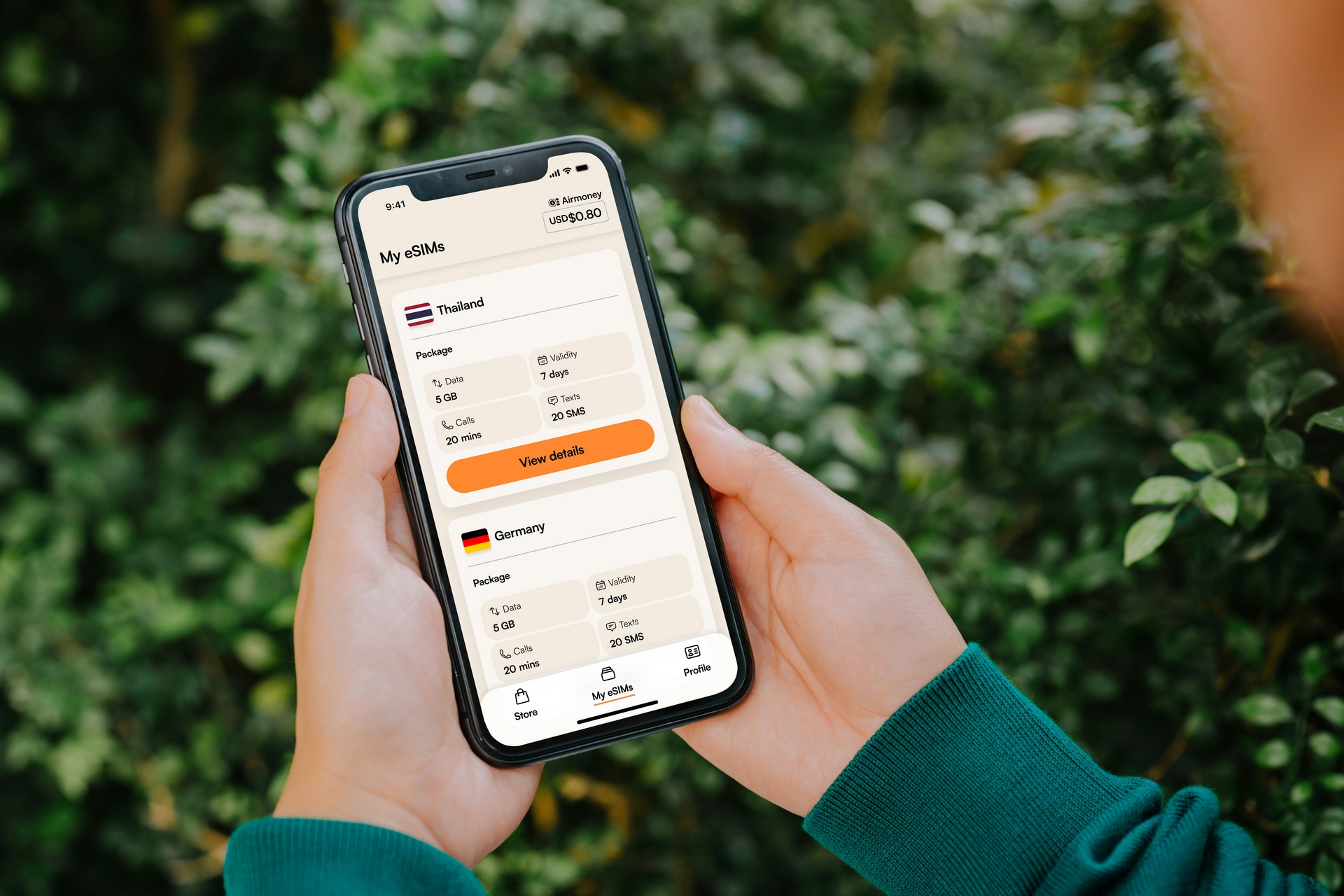
The choice between an eSIM, an international roaming add-on from a home carrier, and a local SIM card comes down mostly to trip length and destination.
- A short trip, a few days to two weeks, in a country with good eSIM coverage: an eSIM bought before departure is usually the simplest option, active before landing, with no shop or card swap needed.
- A longer trip, or one covering multiple countries: a local SIM bought on arrival is often cheaper for the data volume, particularly where local SIMs are inexpensive relative to eSIM packages.
- A trip where a home number needs to stay reachable for calls or two-factor authentication: a carrier’s roaming add-on, despite costing more than the alternatives, keeps the home number active throughout, which an eSIM or foreign SIM does not.
Before buying anything, checking that a phone is unlocked and eSIM-compatible avoids a wasted purchase. Most recent phones support eSIM, but older or carrier-locked devices sometimes do not, worth confirming in phone settings before departure.
Step 8: Plan just enough, not everything
How much to pre-book and what to leave open depends on the destination and season. A trip during a peak period, or to a destination with limited-capacity attractions, benefits from pre-booking the tickets that genuinely sell out: major museums, particular tours, intercity transport during holiday periods. A quieter or very flexible trip can leave far more open without real risk.
The arrival day should stay light regardless of how energetic a traveler feels booking it months in advance. Long-haul travel, time zone changes, and reaching a first accommodation all eat into the day more than expected, and planning nothing more ambitious than checking in and finding dinner nearby tends to work out better than an ambitious first-day itinerary.
Transport between cities, trains, regional flights, intercity buses, is worth booking in advance on routes known to sell out or spike in price closer to the date, and safe to leave for later on routes with frequent departures and stable pricing.

Planning nothing more ambitious than checking in and finding dinner nearby tends to work.
Photo by Daniel Silva Gaxiola on Unsplash
Step 9: Two weeks before, and the week of departure
A focused checklist for the final stretch:
- Complete online check-in and select seats as soon as the airline allows it.
- Confirm every booking: flights, accommodation, and any pre-booked tickets, checking dates and names match exactly.
- Download offline maps for each destination, plus any documents or confirmations that might be needed without internet access.
- Convert or withdraw a small amount of local currency if arriving somewhere ATMs may not be immediately available.
- Pack any regular medication in carry-on luggage, in original packaging, with a copy of the prescription for anything that might raise questions at a border.
- Pack the correct power adapters for the destination, and check voltage compatibility for anything without a universal power supply.
- For international departures, arrive at the airport with enough buffer for check-in, security, and any immigration processing, generally three hours for international flights from major airports, though this varies by airport and route.
ZenHotels insight
Accommodation is usually the single biggest line in a trip budget, so comparing a few booking sites for the same dates before committing is one of the more time-effective ways to bring the overall number down.
Step 10: When the trip doesn’t go to plan
1. Delayed or canceled flights. Compensation rules vary by region: EU and UK flights carry specific compensation regulations for delays and cancellations within the airline’s control, while other regions have weaker or no equivalent protections. Knowing which regulation applies, and keeping boarding passes and receipts for expenses incurred during a delay, makes a compensation claim far easier to pursue afterward.
2. A lost or stolen passport. The process is consistent across most countries: report the loss to local police for an official report, then contact the nearest embassy or consulate of the home country, which can issue an emergency travel document for onward travel or a return home. This can take same-day to several days, so registering with a home country’s travel advisory service before departure, where one exists, can speed things up if ever needed.

EU and UK flights carry specific compensation regulations for delays and cancellations within the airline’s control.
Photo by JESHOOTS.COM on Unsplash
3. Medical care abroad. Paying upfront and claiming reimbursement afterward is standard for most travel insurance policies, though some destinations and policies support direct billing for larger claims. Keeping every receipt, and a copy of any diagnosis or treatment summary, is what makes an insurance claim straightforward rather than a dispute.
4. Staying safe without being paranoid. Basic precautions, awareness of surroundings in unfamiliar areas, checking a destination’s current government travel advisory before departure, keeping copies of documents separate from the originals, cover the overwhelming majority of situations. Most international trips proceed without incident, and treating a destination’s genuine risks as worth checking, rather than assuming the worst, keeps the planning proportionate.
What two weeks abroad actually costs
Figures vary enormously by destination, but this gives a rough shape for a mid-range two-week international trip, excluding the flight itself:
Building in that final buffer line matters more than it looks like it should. An unplanned cost, a missed connection, an extra night, a piece of gear that breaks, is close to guaranteed on some trip, and a budget with no room for it turns a minor inconvenience into a real problem.
Common first-trip mistakes
- Booking too many destinations into too short a trip, leaving every stop feeling rushed.
- Assuming a passport’s expiration date alone is the only thing that matters, rather than checking the destination’s specific validity requirement.
- Treating a credit card’s built-in travel cover as equivalent to a real travel insurance policy.
- Booking the cheapest non-refundable rate before a visa or authorization is actually confirmed.
- Paying for dynamic currency conversion instead of declining it at the terminal.
- Over-planning the arrival day instead of leaving it light.

Over-planning the arrival day instead of leaving it light.
Photo by Drazen Zigic on Shutterstock
Planning tools and apps, honestly
A general trip-planning app can help organize confirmations and rough timelines in one place, but none of them replace checking a destination’s own official sources for visa, entry, and health requirements. A currency converter app removes the mental math of comparing prices while travelling. Offline maps, downloaded before departure, matter more in practice than most other travel apps combined, since they work without a data connection at all. Beyond these, most other tools are a matter of personal preference rather than a genuine planning necessity.
Complicated is a myth, sequential is real
International travel planning is not complicated, it is sequential. Handle the passport and any required authorization first, since those can block a trip outright if left too late. Buy insurance when booking the flight, not closer to departure. Book the accommodation that cannot easily be improvised once landed, and leave the rest of the itinerary loose enough to adjust. Whatever the destination, verifying entry rules on an official government site close to departure is worth the ten minutes it takes, since these rules change more often than most other parts of trip planning.

International travel planning is not complicated, it is sequential.
Photo by kitzcorner on Shutterstock
Comparing accommodation and flexible rates on ZenHotels is a reasonable place to start once the dates and destination are set.


